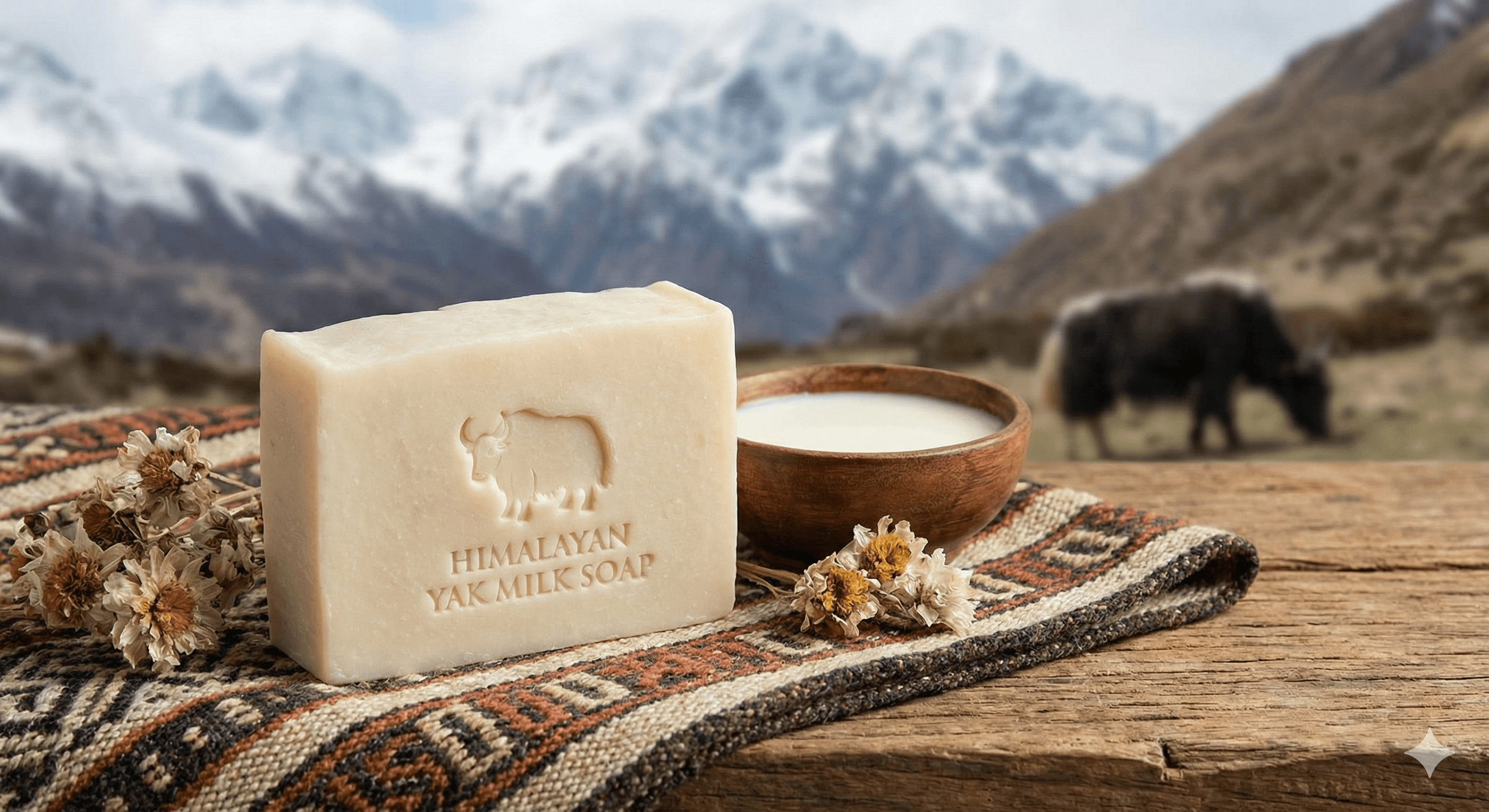
In the high pastures of the Himalayas, above 3,000 meters where ordinary cattle cannot survive, yaks have sustained mountain communities for thousands of years. These hardy, long-haired animals produce milk unlike anything found at lower altitudes — richer, creamier, and more nutritionally dense than the dairy most of us are familiar with.
For generations, Himalayan communities have used yak milk not just as food but as medicine and skincare. Today, that tradition is being expressed in the form of handmade yak milk soaps — and once you understand what is in yak milk, it is easy to see why these soaps have earned a devoted following.
What Makes Yak Milk Different?
Yak milk is compositionally distinct from cow or goat milk in ways that matter enormously for skincare.
Fat content: Yak milk contains 6–8% fat, compared to 3.5% in typical cow milk and 4.5% in goat milk. This high fat content is what gives yak milk soap its characteristic creaminess and moisturizing power. When used in cold-process soap making, these fats saponify into fatty acid chains that condition the skin rather than stripping it.
Protein: Yak milk is richer in both casein and whey proteins than cow milk. In soap form, these proteins form a fine lather and help the soap adhere gently to the skin, improving its cleansing efficiency without harshness.
Vitamins: Yak milk contains higher concentrations of vitamin A (essential for skin cell turnover and repair), vitamin D (important for skin barrier function), vitamin B12, and riboflavin compared to lowland dairy.
Lactic acid: All milk contains lactic acid, an alpha-hydroxy acid (AHA) that gently exfoliates the skin by loosening the bonds between dead skin cells. This is the same compound used in professional skin treatments and high-end cosmetics, and it occurs naturally in milk soap. Regular use leaves skin noticeably smoother and more even-toned over time.
Benefits for the Skin
Deep Moisturization
The combination of high-fat content and naturally occurring glycerin (a byproduct of the saponification process in cold-process soap making) makes yak milk soap genuinely moisturizing — not in a surface coating way, but at the level of supporting the skin's natural barrier function.
People with dry skin, eczema-prone skin, or those who find standard commercial soaps harsh will often notice a significant difference within a week of switching to yak milk soap. The skin feels softer not because a coating has been applied, but because the soap has not damaged the skin's lipid barrier in the first place.
Gentle Exfoliation
The lactic acid in yak milk provides ongoing, gentle chemical exfoliation. Unlike physical scrubs that can cause microtears in sensitive skin, lactic acid works by slightly loosening the protein bonds between dead skin cells, allowing them to shed naturally.
Over time, regular use can visibly improve skin texture, reduce the appearance of hyperpigmentation, and leave the complexion brighter and more even. This is why milk has been a skincare staple from Cleopatra's famously milk-filled baths to modern clinical esthetics.
Sensitive Skin Compatibility
Unlike many commercially produced soaps that contain synthetic detergents (sodium lauryl sulfate is the most common offender), handmade yak milk soap uses natural saponified oils and milk fats as its cleansing agents. These are far gentler on the skin's natural microbiome and do not disrupt the acid mantle — the slightly acidic protective layer that keeps pathogens out and moisture in.
Yak Milk Rose Soap
The rose variant combines yak milk's nourishing base with the addition of rose petals and, in many formulations, rosehip oil. Rosehip oil is exceptionally high in vitamin C and retinoic acid (a natural form of vitamin A), making it one of the most evidence-backed botanicals for supporting skin health.
Rose also has long-established antimicrobial and anti-inflammatory properties. The combination of yak milk and rose is particularly well-suited for normal to sensitive skin types, and the natural rose fragrance — not synthetic, but from actual rose petals — makes it genuinely pleasant to use daily.
Himalayan Black Salt Soap
This variant introduces Himalayan black salt (kala namak) into the yak milk base — a combination that sounds unusual but makes considerable practical sense.
Black salt is rich in sulfur, iron, and trace minerals that have been used topically for skin conditions including acne and oiliness. Sulfur is a recognized comedolytic — it helps break down the keratin plugs that form blackheads and whiteheads — and has been used in dermatology for over a century.
The coarser salt crystals also provide a mild physical exfoliation effect, making this the more intensive option of the three soaps. It is well-suited to oilier skin types, body use, and anyone who wants a deeper cleanse.
The visual effect is striking too — the soap has a distinctive dark, charcoal-grey appearance from the black salt, which makes it look as interesting as it functions.
Why Handmade Matters
Most commercial soap is not technically soap at all — it is a synthetic detergent bar, produced through a hot industrial process that removes glycerin (which is then sold separately to cosmetic companies) and replaces it with synthetic lathering agents and petroleum-derived moisturizers.
Traditional cold-process soap making retains all the natural glycerin, uses gentle temperatures that preserve the beneficial properties of the milk and oils, and produces a bar that is genuinely different in feel and effect from its mass-produced counterparts.
The handmade soap from Nepal's Himalayan producers follows these traditional methods. Each bar is made in small batches, cured for 4–6 weeks to harden and mellow, and contains no synthetic fragrances, parabens, or sulfates.
How to Get the Most from Yak Milk Soap
- Store it dry between uses. A wooden soap dish that allows air circulation is ideal. Sitting in pooled water is the fastest way to shorten a bar's life.
- Use warm water, not hot — hot water strips more of the skin's natural oils along with the soap's conditioning fats.
- Be patient — the skin takes 2–4 weeks to adjust when switching from commercial detergent bars. Some people experience temporary oiliness or dryness during this transition, which is normal.
- For sensitive areas, the rose or plain yak milk variant is gentler than the black salt option.
A Product Worth Using Every Day
There is something deeply satisfying about a soap that actually does what it promises — cleans the skin without stripping it, leaves it genuinely softer without coating it in silicone or synthetic moisturizers, and smells of something real.
Yak milk soap is one of those products. It has earned its reputation not through marketing but through the straightforward chemistry of good fats, natural lactic acid, and honest craftsmanship. For anyone tired of reaching for body lotion every time they step out of the shower, it is worth trying.