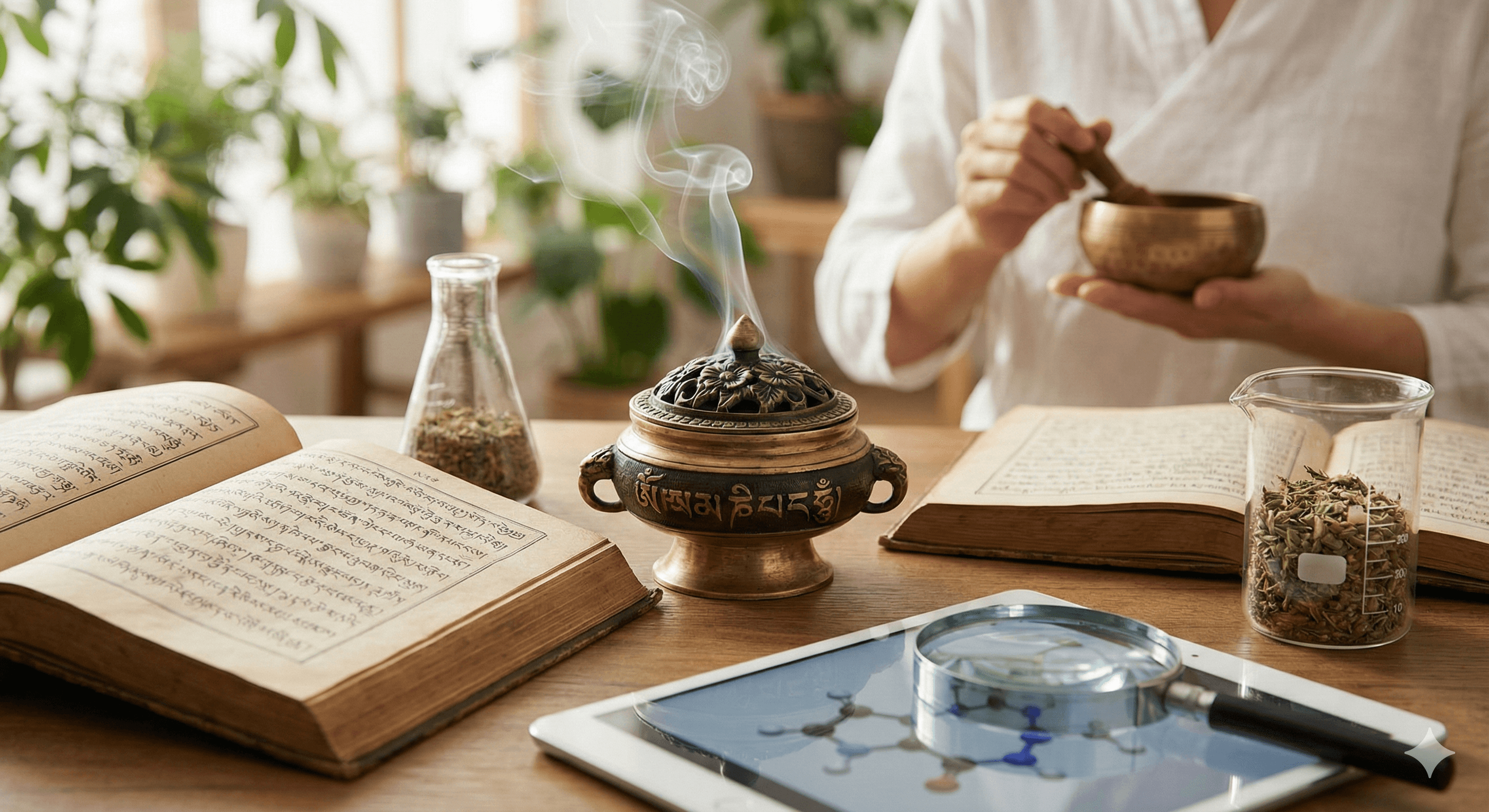
Walk into any Tibetan Buddhist monastery and the first thing you notice is the smell. It is not the overpowering synthetic sweetness of cheap commercial incense — it is something older and more complex. Woody, herbal, slightly earthy, with layers that shift as you sit with them. It is a smell that immediately signals that you have arrived somewhere different, somewhere slower.
That smell is Tibetan incense — a tradition of natural aromatic formulation that stretches back over a thousand years, developed by Buddhist monks and Tibetan physicians who understood the relationship between scent, mind, and body in ways that contemporary neuroscience is only beginning to quantify.
What Makes Tibetan Incense Different
Most commercial incense contains synthetic fragrance oils, chemical accelerants, and a bamboo stick dipped in scented liquid. It burns quickly, smells artificial, and has no therapeutic tradition behind it.
Tibetan incense is a completely different category. Traditional formulas are made entirely from plant-based ingredients — combinations of medicinal herbs, aromatic woods, resins, and spices that have been carefully selected and balanced over generations of use in monasteries and Himalayan healing practices.
A typical Tibetan formula might include:
- Juniper — one of the most common Himalayan aromatic woods, with a clean, resinous smoke used in purification rituals
- Rhododendron — flowers and leaves from Nepal's national flower, valued for their aromatic and medicinal properties
- Nagi (spikenard) — a Himalayan root with a rich, earthy, slightly musty fragrance, used extensively in Tibetan medicine
- Cardamom — warm and sweet, used both aromatically and medicinally throughout South and Southeast Asia
- Sandalwood — grounding and calming, one of the most researched aromatic compounds for anxiety reduction
- Clove and nutmeg — warming spices with antimicrobial properties
- Red and white sandalwood — different species with different aromatic profiles, often combined in traditional formulas
These ingredients are ground, mixed with a natural binder, and hand-rolled into sticks or coils — no bamboo core, no synthetic accelerant. The result burns more slowly, more evenly, and with considerably less irritating smoke than commercial alternatives.
The Science of Aromatherapy
The idea that scent affects mood and cognition is not just traditional wisdom — it is increasingly well-documented science. The olfactory system is the only sensory pathway with a direct neural connection to the limbic system, the brain's emotional and memory center. Every other sense routes through the thalamus first. Smell goes straight to the source.
This is why a specific smell can evoke a vivid emotional memory immediately and involuntarily, and why aromatic compounds can influence mood, anxiety, and cognitive function with a speed that no oral supplement can match.
Sandalwood (α-santalol) has been studied for its anxiolytic effects — a 2006 study in Planta Medica found that inhalation of sandalwood oil significantly reduced anxiety and improved attentiveness. The compound appears to activate serotonin receptors in the central nervous system.
Frankincense resin (incensole acetate), used in some Tibetan and Nepali formulas, has been shown to have antidepressant properties in animal studies, activating ion channels in the brain that alleviate anxiety and depression.
Juniper smoke has documented antimicrobial properties — a study published in the Journal of Ethnopharmacology found that juniper smoke significantly reduced airborne bacteria in enclosed spaces, which explains its traditional use in purification ceremonies.
Green Tara Incense
Green Tara is one of the most beloved deities in Tibetan Buddhism — the female embodiment of compassion and swift action, who vowed to achieve enlightenment in female form to help all beings. Incense dedicated to her carries specific aromatic associations: gentle, uplifting, and compassionate in character.
Tibetan Green Tara incense is formulated with a blend of Himalayan herbs and aromatic botanicals chosen for their light, calming, and heart-opening qualities. It is often used in meditation practice dedicated to cultivating compassion and emotional openness — states that are actively supported by the aromatic compounds in the blend.
The smoke is gentle and the burn is slow and even. It works well for daily meditation practice, yoga sessions, or simply as an aromatic backdrop for reading or quiet work.
Karma Happiness Incense
Where Green Tara incense is gentle and contemplative, Karma Happiness incense is warmer and more grounding. Its formula emphasizes resins and warm spices — ingredients traditionally associated with energy cleansing, positive intention, and emotional warmth.
The name references the Buddhist concept of karma — the understanding that intentions and actions shape experience. Using this incense is a small ritual of setting positive intention, a way of marking the beginning of a meditation session, a working day, or any activity you want to approach with clarity and purpose.
In practice, the aromatic profile is warm, woody, and slightly resinous — very much in the Himalayan monastery tradition, with none of the cloying sweetness that dominates commercial "relaxation" incense.
How to Use Incense Mindfully
The key difference between therapeutic and recreational incense use comes down to attention. Lighting a stick and walking away to do something else is entirely different from sitting with the smoke intentionally.
For meditation:
- Light your incense and allow the initial flame to go out naturally — do not blow it out, as this sends a surge of smoke upward
- Set the stick in a stable holder and take a moment to simply observe the rising smoke before closing your eyes
- Use the scent as an anchor — when your mind wanders, the smell can serve as a return point, similar to using the breath
- Burn one stick per session, allowing the gradual diminishment of the incense to mark the natural end of your practice
For the home environment:
- Choose a draft-free room for a clean, even burn
- Allow adequate ventilation — Tibetan incense is natural, but any smoke in an enclosed, unventilated space is not ideal for extended periods
- Use a proper incense holder that catches the ash safely
For sleep preparation:
- Burn one stick about 20 minutes before bed, allowing the smoke to clear by the time you lie down
- Sandalwood or juniper-based formulas are particularly suited to the transition toward sleep
A Practice Worth Cultivating
There is a reason that every major spiritual tradition in the world — Buddhist, Hindu, Catholic, Islamic, Jewish, indigenous — has developed its own form of ritual incense burning. The deliberate use of aromatic smoke marks time, shifts attention, and creates a sensory signal to the nervous system that something different is about to happen.
In a world of constant distraction and digital noise, that signal has become more valuable, not less. A stick of genuine Himalayan incense, lit with intention at the beginning of a meditation session or a quiet morning, is a small but meaningful technology for the mind — one that monks in Himalayan monasteries have been relying on for a thousand years.
That is a reasonably good track record.