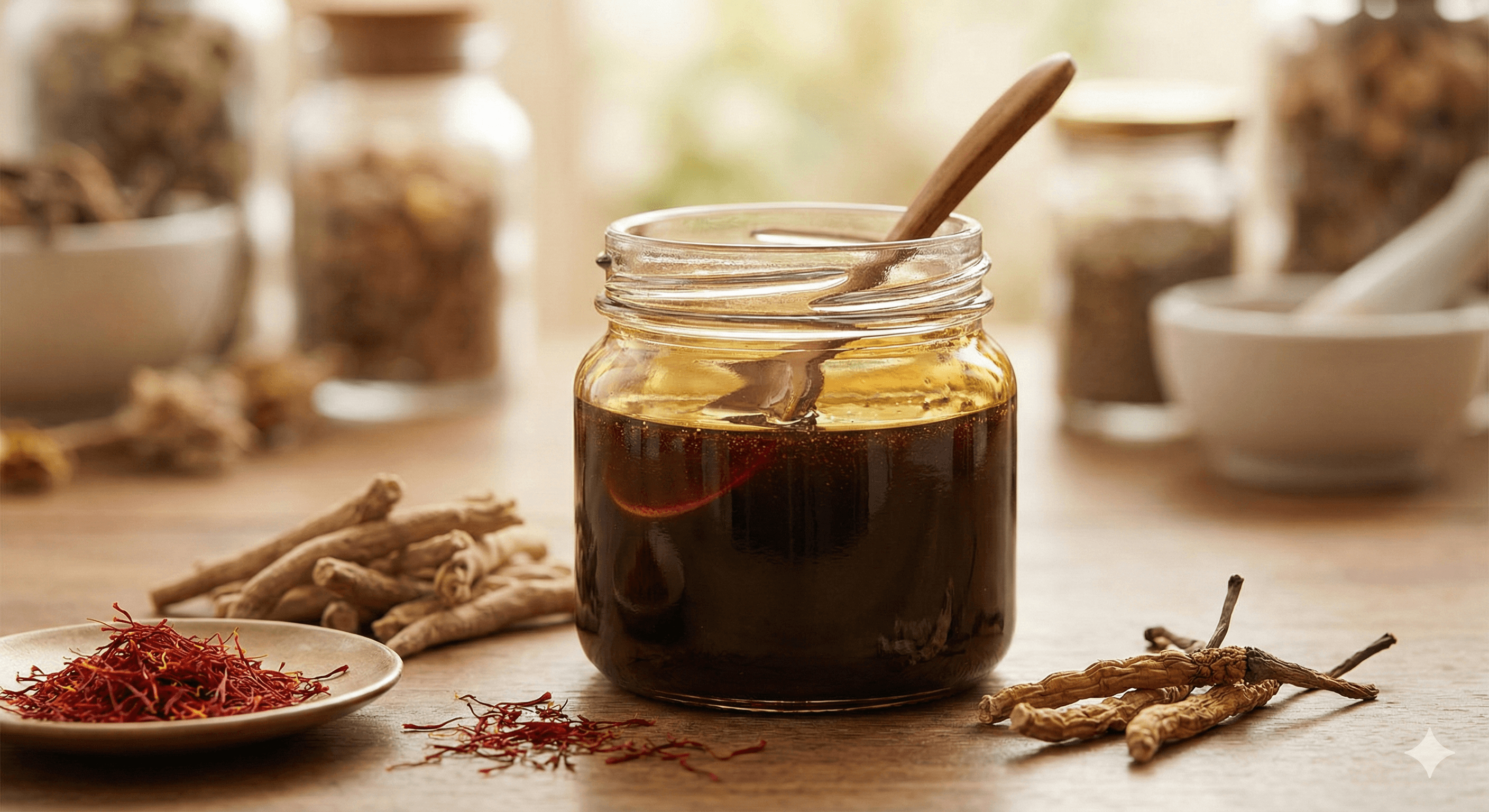
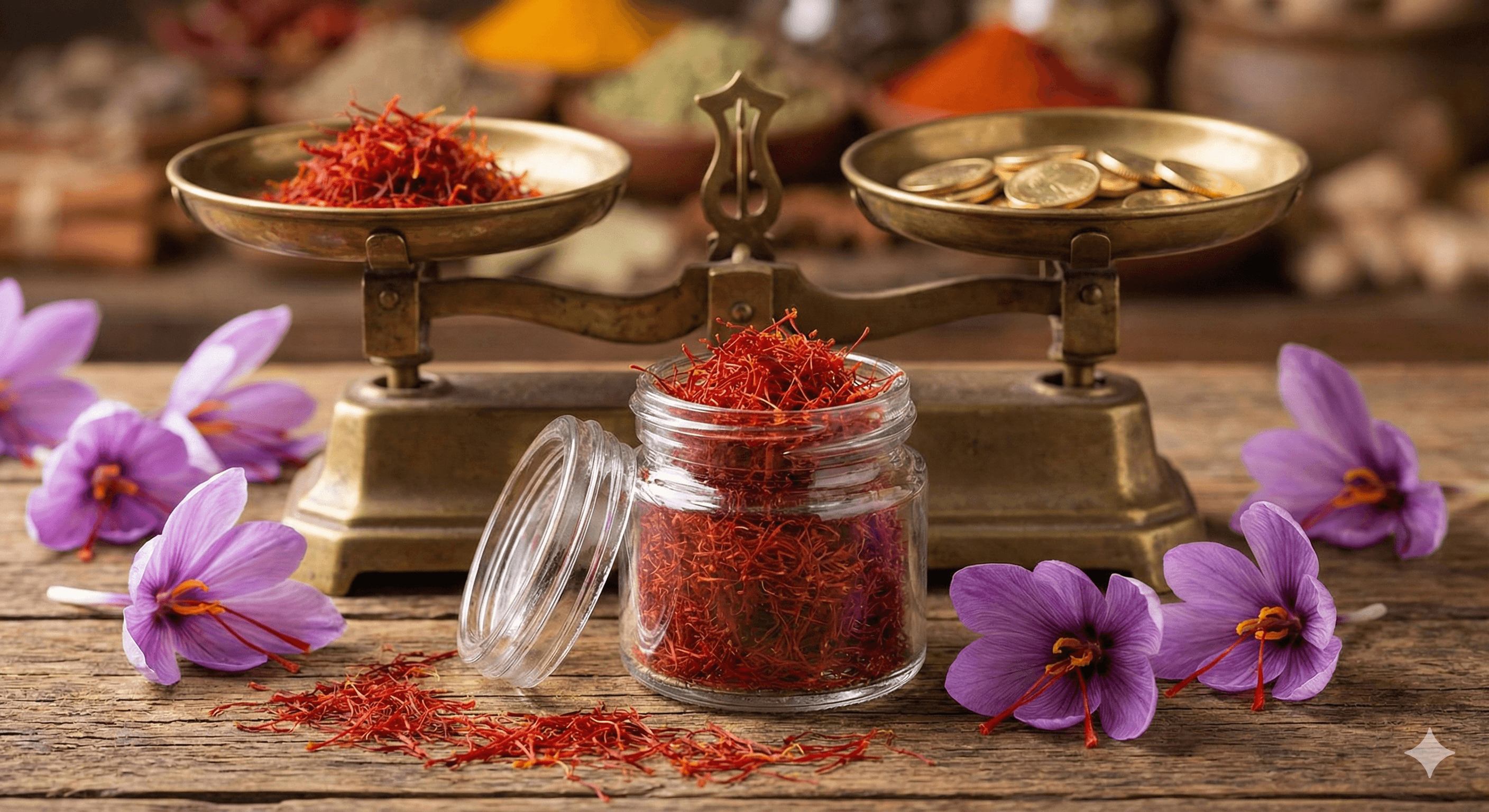
Saffron costs more per gram than gold. That is not an exaggeration — high-quality saffron retails for $10 to $20 per gram, while gold trades at around $60 per gram at current prices. But the comparison misses the point. Gold is just a metal. Saffron is an experience, a medicine, and a piece of human history that stretches back more than 3,500 years.
Here is why it is worth understanding — and worth spending a little more to get the real thing.
Why Is Saffron So Expensive?
The answer is entirely in the labor. Saffron comes from the stigmas — the female reproductive parts — of Crocus sativus, a small purple-flowering plant that blooms for only two to three weeks each autumn. Each flower contains exactly three stigmas, which must be picked by hand within hours of the flower opening, before the heat of the day can damage the delicate threads.
A skilled harvester working quickly can pick the stigmas from perhaps 1,000 flowers in an hour. It takes 75,000 flowers to produce a single pound of dried saffron. There is no mechanized alternative. It will always be this labor-intensive, which means it will always be expensive.
What you get for that price is something with no substitute. No artificial coloring or synthetic flavoring has ever convincingly replicated what saffron does to food and the body.
The Active Compounds
Three compounds give saffron its distinctive properties:
Crocin — the carotenoid pigment responsible for saffron's golden color. Crocin is a powerful antioxidant and is the compound most studied for saffron's neuroprotective and antidepressant effects.
Safranal — the volatile compound that gives saffron its characteristic aroma. It is produced when saffron is dried, from the breakdown of a precursor called picrocrocin. Safranal also has documented anticonvulsant and sedative properties.
Picrocrocin — the glycoside responsible for saffron's distinctive bitter taste. It acts as a flavor balancer, preventing the sweetness of crocin from dominating.
Proven Health Benefits
Mood and Mental Health
This is where the science on saffron has become genuinely exciting. Multiple randomized controlled trials — the gold standard of clinical evidence — have compared saffron supplementation to pharmaceutical antidepressants.
A meta-analysis published in the Journal of Integrative Medicine reviewed 23 clinical trials and found that saffron supplementation was significantly more effective than placebo for mild to moderate depression, and equivalent in effectiveness to standard doses of SSRIs like fluoxetine and sertraline — without the common side effects of weight gain, sexual dysfunction, and emotional blunting.
The mechanism appears to involve saffron's ability to inhibit the reuptake of serotonin in the brain, similar to how SSRIs work, but through a different molecular pathway.
This does not mean saffron should replace prescribed medication for serious depression — it should not. But for mild mood disturbance, general low mood, or PMS-related emotional symptoms, the evidence for saffron is remarkably strong.
Cognitive Protection
Crocin has demonstrated neuroprotective properties in multiple studies. Research published in Psychopharmacology found that saffron extract improved memory and learning in both healthy adults and those with mild cognitive impairment. Animal studies have shown that crocin can inhibit the formation of amyloid plaques — the protein aggregations associated with Alzheimer's disease.
A clinical trial in Iran enrolled patients with mild to moderate Alzheimer's disease and found that saffron supplementation over 22 weeks produced cognitive improvements comparable to donepezil (a standard Alzheimer's medication), with fewer gastrointestinal side effects.
Eye Health
Crocin and related carotenoids are concentrated in the macula of the eye — the area responsible for detailed central vision. Studies from the University of L'Aquila in Italy found that daily saffron supplementation improved visual acuity in patients with early age-related macular degeneration, and the improvements were sustained over time.
Anti-Inflammatory and Antioxidant Effects
Saffron's overall antioxidant capacity is substantial. It inhibits the production of inflammatory cytokines including TNF-α and IL-6, and has shown protective effects against oxidative damage in cardiac, liver, and kidney tissue in multiple animal models.
How to Use Saffron
The key is blooming — never add saffron directly to a dish cold. The active compounds are fat-soluble and water-soluble, and they need warmth to be released from the threads.
Standard method: Steep 8–12 threads in 2–3 tablespoons of warm water or milk for 15–20 minutes before adding to your recipe. The liquid will turn a vivid golden-orange and carry the full flavor and medicinal compounds.
In cooking: Add bloomed saffron to rice, stews, soups, or sauces. Nepali and Persian rice dishes use saffron as a foundational flavor. A pinch per 4 servings is usually sufficient.
As a daily tonic: Add 8–10 threads to a cup of warm milk with honey. Drink before bed. This is a traditional Persian and Ayurvedic preparation called "saffron milk" and is used as both a sleep aid and a mood tonic.
For baking: Bloom in warm liquid, then incorporate. Saffron bread, saffron buns, and saffron-infused sweets are common across Persian, Indian, and Scandinavian traditions.
How to Tell Real Saffron from Fake
The saffron market has a serious adulteration problem. Dyed safflower petals, colored corn stigmas, and synthetic dye-soaked threads are all sold as saffron. Here is how to verify the real thing:
The water test: Place a few threads in cold water. Real saffron releases color slowly over 10–15 minutes, producing a rich golden-orange. Fake saffron releases color immediately and turns the water an unnatural red.
The rub test: Rub a thread between your fingers. Real saffron leaves a yellow-orange stain. Fake saffron either leaves no stain or a red one.
The taste test: Real saffron tastes pleasantly bitter with a floral sweetness. Fake saffron tastes of nothing or of synthetic sweetener.
The shape: Real saffron threads are trumpet-shaped — wider at one end and narrower at the other. They are dark red to deep burgundy with a slightly yellow tip at the narrow end.
ISO certification: Reputable sellers provide ISO 3632 certification. Grade 1 saffron has the highest crocin, safranal, and picrocrocin content.
The Bottom Line
Saffron is not a garnish. It is one of the few substances in the culinary world that is simultaneously a world-class flavor ingredient and a clinically supported medicine. Its documented effects on mood, cognition, and eye health are backed by better evidence than most supplements on the market.
The key is buying the real thing. A few genuine threads steeped in warm milk will show you exactly why this spice has been worth its weight in gold across three and a half thousand years of human history.