On the towering limestone cliffs of Nepal's Annapurna and Lamjung regions, the world's largest honeybees — Apis dorsata laboriosa — build enormous hives hundreds of meters above the valley floor. Twice a year, Gurung tribespeople scale these cliffs using handmade rope ladders and smoking torches to harvest a honey unlike anything else on Earth.
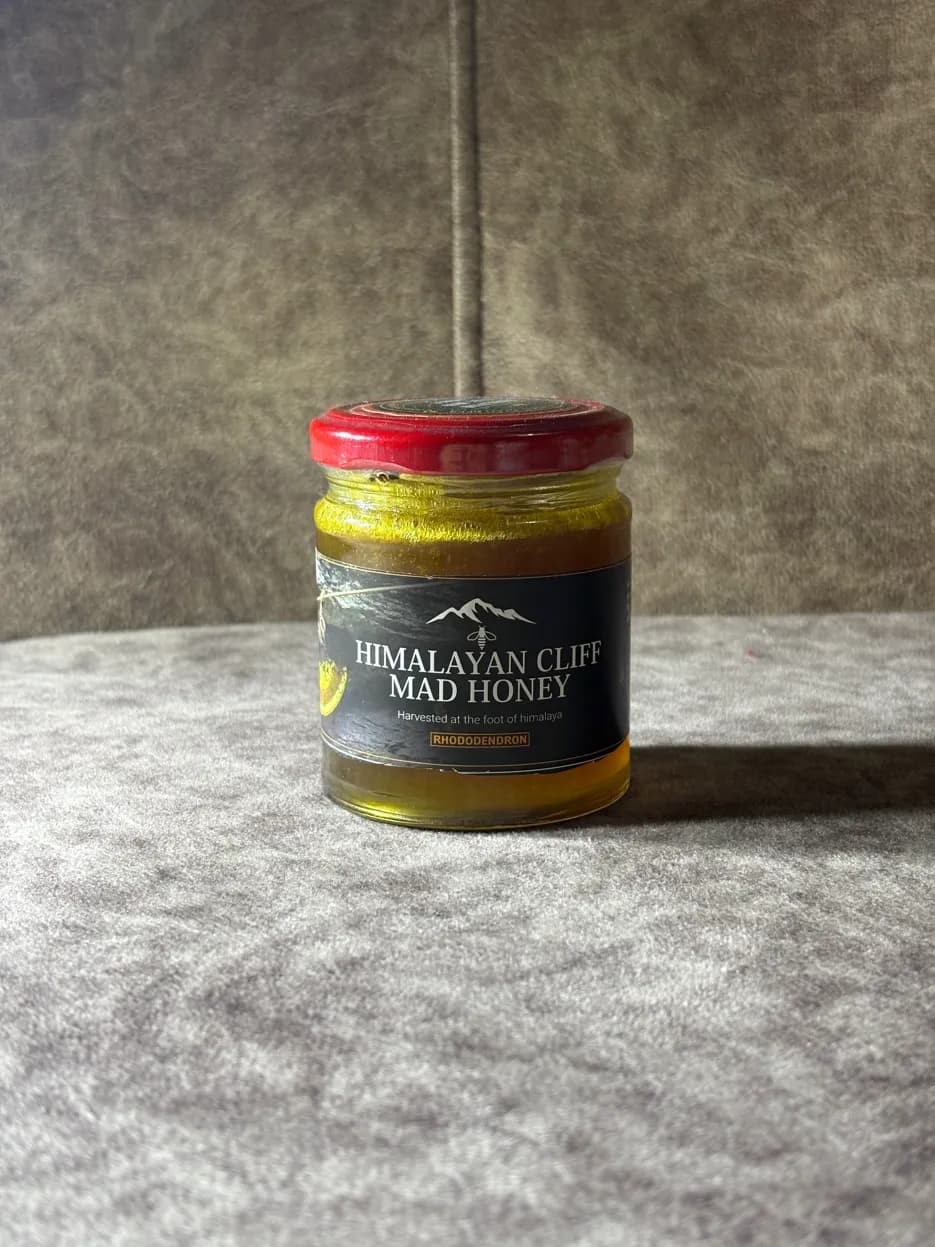
This is mad honey — a reddish, slightly bitter honey that contains grayanotoxin, a natural compound that produces mild psychoactive and medicinal effects. It is one of the rarest and most fascinating natural substances in the world.
What Makes Mad Honey "Mad"?
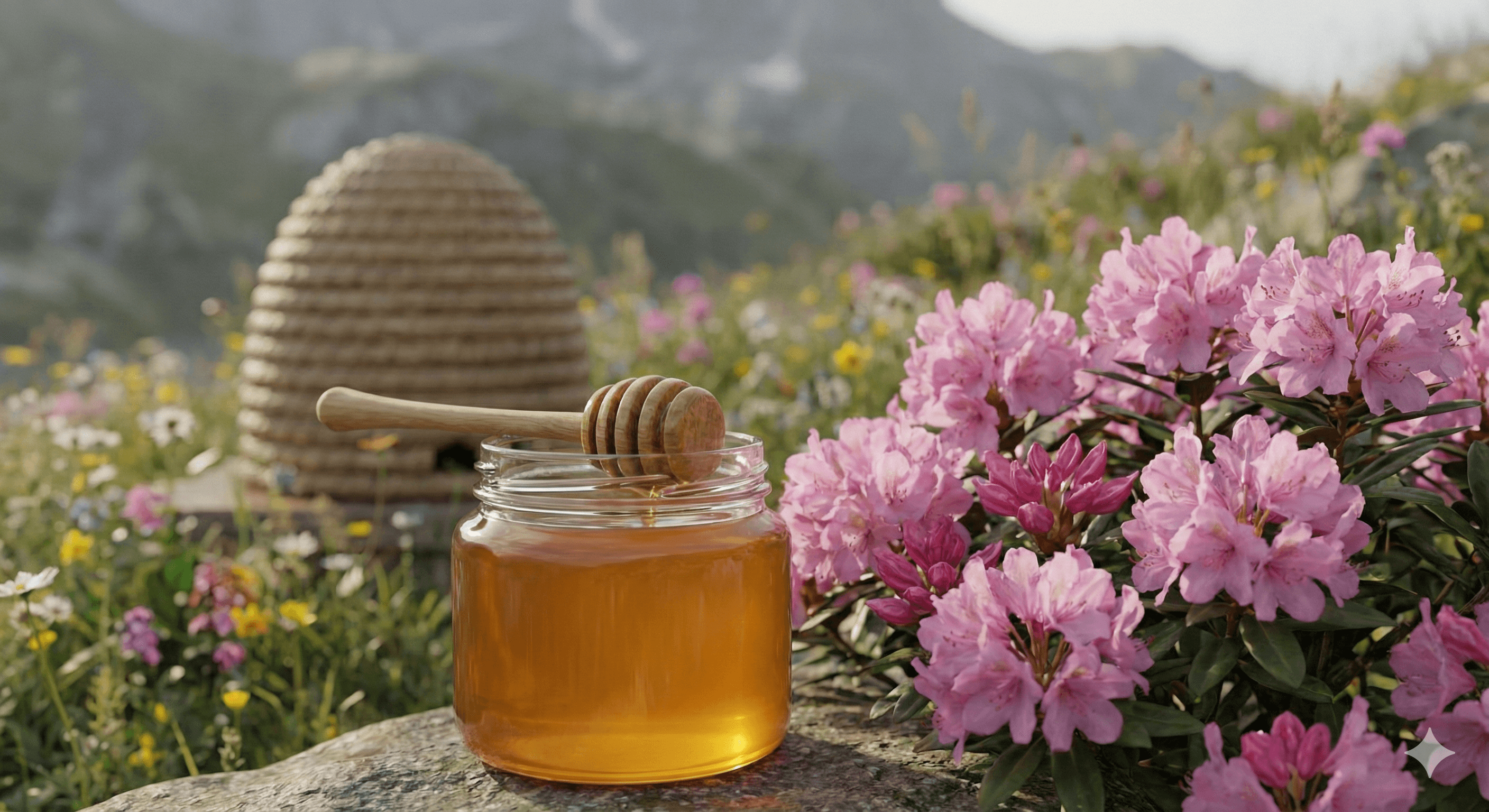
Mad honey gets its unique properties from grayanotoxin, a neurotoxin produced by rhododendron flowers. Nepal's high-altitude forests are blanketed with over 30 species of wild rhododendron, and when Apis dorsata laboriosa forages on these blossoms during the spring bloom (March–May), the resulting honey contains measurable levels of grayanotoxin.
Grayanotoxin works by binding to sodium ion channels in cell membranes, keeping them open longer than normal. In small doses, this produces a warming, tingling sensation and mild relaxation. In larger doses, it can cause dizziness, low blood pressure, and bradycardia (slowed heart rate).
The potency varies significantly by season. Spring harvest (March–May) produces the strongest mad honey, as rhododendron blooms are at their peak. Autumn harvest (October–November) tends to be milder and sweeter, as bees forage on a wider variety of flowers.
A History Stretching Back Millennia
Mad honey is not a modern discovery. Its effects have been documented for over 2,500 years.
401 BC — The Greek historian Xenophon recorded in Anabasis that his soldiers became disoriented after eating wild honey near the Black Sea coast of Turkey (another region rich in rhododendron). He wrote that the men "went off their heads" and lay on the ground as if after a battle, but recovered fully the next day.
67 BC — Roman general Pompey the Great suffered one of history's most unusual military defeats when King Mithridates of Pontus placed toxic honeycomb along the route of Pompey's advancing troops. The Roman soldiers ate the honey, became incapacitated, and were ambushed by Mithridates' forces.
In Nepal, the Gurung people have harvested mad honey for generations — both for personal use and trade. Traditionally, it has been used as a folk remedy for a variety of conditions and as a valued gift for honored guests.
Traditional and Modern Uses
Medicinal Uses
In the traditional medicine practices of Nepal and the broader Himalayan region, mad honey has been used for:
- Hypertension management — The blood-pressure-lowering effect of grayanotoxin has been used traditionally to help manage high blood pressure. Small clinical observations in Turkey (where a similar honey is produced) have documented its hypotensive effect.
- Pain relief — Applied topically or consumed in small doses, mad honey is traditionally used to soothe joint pain, muscle aches, and arthritis symptoms.
- Digestive support — Used in folk medicine as a remedy for stomach ulcers, gastritis, and general digestive discomfort.
- Respiratory conditions — Traditionally consumed with warm water to soothe sore throats, coughs, and cold symptoms.
- Energy and vitality — Consumed in small amounts as a natural energizer, particularly among the Gurung and other hill communities.
Recreational Use
In small, controlled doses (typically one to two teaspoons), mad honey produces a mild sensation described as warmth spreading through the body, light-headedness, and a gentle euphoric feeling. This effect typically lasts one to two hours. It is this mild psychoactive quality that has drawn international curiosity and earned it the name "mad honey."
How Mad Honey Is Harvested
The harvest of mad honey is one of the most dramatic and dangerous food-gathering traditions on Earth.
Gurung honey hunters work in teams, descending the cliff face on braided rope ladders while assistants above manage the ropes. They use long bamboo poles called tangos fitted with a blade to cut the honeycomb free, and baskets to catch the falling comb. Smoke from burning grass bundles is used to drive the bees away.
The entire process — from the prayers and offerings made before the hunt to the final division of the harvest among the village — is steeped in cultural ritual and community cooperation. UNESCO and various documentary filmmakers have highlighted these hunts as a living cultural heritage under increasing threat from climate change and habitat loss.
Dosage and Safety
Mad honey must be consumed responsibly. The effects of grayanotoxin are dose-dependent:
| Dose | Expected Effect | | --------------------- | ---------------------------------------------------------- | | 1 teaspoon (5g) | Mild warmth, slight relaxation | | 1 tablespoon (15g) | Noticeable warmth, light-headedness, gentle euphoria | | 2+ tablespoons (30g+) | Risk of dizziness, nausea, low blood pressure, bradycardia |
Safety guidelines:
- Start small — Begin with one teaspoon and wait at least two hours before considering more.
- Never consume on an empty stomach — Have a light meal first to moderate absorption.
- Avoid mixing with alcohol or blood-pressure-lowering medications.
- Not recommended for pregnant women, children, or individuals with heart conditions.
- Seek medical attention if you experience persistent dizziness, vomiting, or an abnormally slow heart rate after consumption.
Grayanotoxin poisoning, while unpleasant, is rarely life-threatening and typically resolves within 24 hours with supportive care.
What to Look For When Buying
The growing international demand for mad honey has led to widespread faking and dilution. Here is how to identify authentic Nepali mad honey:
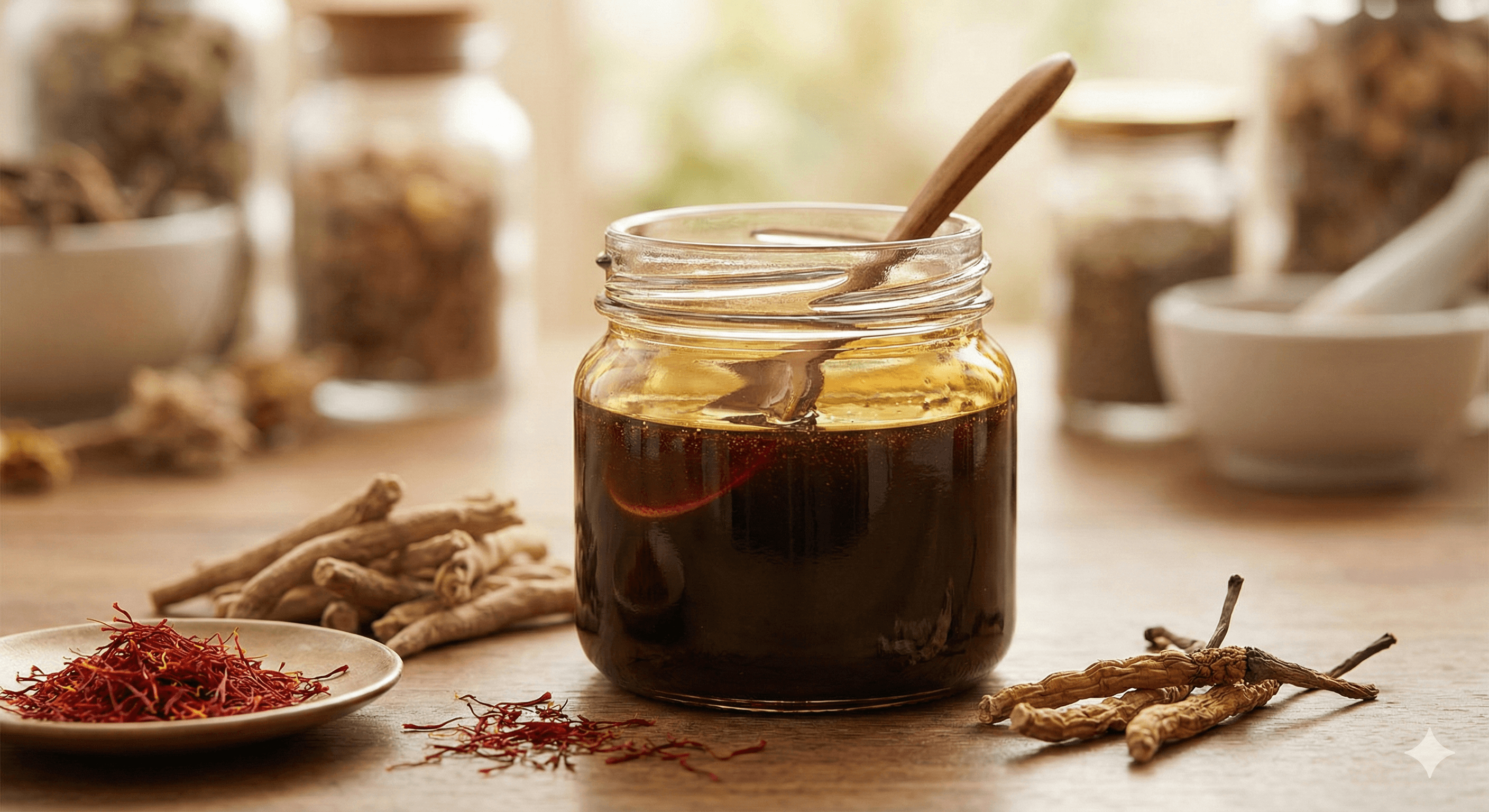
- Color: Genuine mad honey is darker than regular honey — typically a deep reddish-amber.
- Taste: It has a distinct slightly bitter, tangy edge that regular honey lacks. If it tastes purely sweet, it is likely not authentic.
- Texture: It tends to be thinner and more liquid than processed commercial honey.
- Source verification: Buy from sellers who can trace their honey to specific harvesting communities in Nepal's Gurung regions (Lamjung, Kaski, Manang).
- Lab testing: Reputable sellers provide certificates of analysis confirming the presence of grayanotoxin.
The Cultural Significance
Mad honey is far more than a novelty product. For the Gurung communities of Nepal, the honey hunt is a sacred tradition that connects them to their ancestors, their landscape, and their identity. The proceeds from mad honey sales provide vital income to remote mountain villages where few other economic opportunities exist.
However, this tradition faces real threats. Climate change is shifting rhododendron bloom patterns, reducing grayanotoxin concentrations. Younger generations are migrating to cities. Over-harvesting driven by international demand puts pressure on wild bee populations.
Supporting ethical, community-sourced mad honey means supporting the preservation of one of humanity's most extraordinary food traditions.
The Bottom Line
Mad honey is a truly unique natural product — a convergence of extreme geography, ancient botany, and human daring. Whether you are drawn to it for its traditional medicinal uses, its mild psychoactive properties, or simply the extraordinary story behind its harvest, it deserves respect and careful use.
Start with a small dose, source it responsibly, and appreciate the centuries of tradition that bring this remarkable honey from the cliffs of the Himalayas to your table.